18+ Content Warning

This forum may contain content not suitable for minors.
By clicking "Enter", you confirm that you are
18 years of age or older
and agree to proceed at your own discretion.
Be sure to Read the Terms and Rules before participating.

  • Welcome to Nevada Shooters!

    You are currently viewing our boards as a guest which gives you limited access to view most discussions and access our other features. By joining our free community you will have access to post topics, communicate privately with other members (PM), respond to polls, buy and sell with in our popular Trading Post and more! Registration is fast, simple and absolutely free! Join our community today!

Recommend me some family radios?

jfrey123

I aim to misbehave...
Staff member
Moderator
Forum Supporter
2019 Supporter
2020 Supporter
2021 Supporter
2022 Supporter
2023 Supporter
2024 Supporter
2025 Supporter
2026 Supporter
Trading Post Subscriber
I scrolled through a few pages before deciding to post. I’m looking to buy one of those radio 4 packs for family use. I think that means I can look at the FRS radios, and appears some offer privacy codes within the channels they operate on (helpful for when we’re in well populated areas with other radios).

I’m searching Amazon and I’m sure many are low quality garbage. Intended use would be the kiddos carrying them while skiing and camping. I’m not familiar enough with the brands to decide which can survive a few drops or a splash in the lake. I feel like Midland is a brand I recognize, and I’ll pay a bit extra for those if Midland is good.

So… school me. FRS (Family Radio Service) is what I want for family use, right? Do you have a set you love that I should consider? I am ham licensed but I’m a terrible ham user (I have one of the ButtFong handhelds so I can jabber with the local 4x4 club on trail, that’s about all I’ve done lol)
 
The Midland FRS radios are good, so are the Radioddity.
Spend the $35, no test required, and get the GMRS license, you get the license, and the law allows your entire immediate family to use it under your call sign.

FRS radios are limited to 2 watts, GMRS handhelds are limited to 5 watts, and the mobiles to 50 watts, so, much greater range potential.
The Radioddity GMR30 hand held, $39, on sale as low as $29, is a great little 5 watt hand held, and it does BOTH GMRS (including GMRS repeaters, there are no FRS repeaters) AND FRS.

OR, since you have a HAM license, buy a YAESUE FT4X ($89) or the larger FT65 ($99) and then do the very simple MARS/CAP mod on it (no soldering required on either of these two radios, the MARS/CAP mod, which "Opens Up" the radio so that it will transmit a bit outside the ham bands) is done by holding down two buttons, turning the radio on, which puts it in factory reset mode, then entering an 8 digit code to unlock it.
And the procedure can be reversed to lock it into only transmitting on the ham bands, no limit on how many times this can be done either.

That way you carry one radio, with HAM, GMRS, FRS, and MURS capabilities, and you give the family the Radioddity GMR30's so you can talk to them on GMRS and FRS.
Best bang for the buck that way, and best for SHTF scenarios as well.
 
Amazon.com: 2 Pack Radioddity GM-30 GMRS Handheld Radio 5W Long Range Two Way Radio for Adults, GMRS Repeater Capable, with NOAA Scanning & Receiving, Programming Cable, Display SYNC, for Off Road Overlanding : Electronics

Yaesu FT4X onsale now at Gigaparts $79.99
Yaesu FT-4XR, FT4XR GigaParts.com
Yaesu FT65R onsale now at Gigaparts for $94.99
Yaesu FT-65R 5W VHF/UHF Handheld Transceiver GigaParts.com
Midland MXT500 50 watt GMRS mobile
Amazon.com : midland mxt500

I have all the above, and use them all extensively in my volunteering with the county's S.O., Emergency Services, Search and Rescue, etc. and all of them have proved to be very reliable, and most of all, EASY to program.
 
I picked up five BaoFeng UV-82HP ($34.19 each on Amazon and some multi-packs available) and they work great. There are, depending on who you talk to, potential licensing issues, depends. These work great, we use them hiking and such where cell phones don't work. Spare batteries are cheap.

GMRS is best start, good for yourself and family.

Since getting these and GMRS, I did get my Technician and General licenses, tested both same day, then a couple months later my Extra license. Even got back my original 1977 call sign. But I don't use the amatuer, just the radios for hiking, the rest is for emergency.

I put a BTech UV-50X2 50 watt radio in my truck with a glass-mount antenna.

Lastly, I uploaded all the repeaters, programmed the radios identically. All tests well, very happy for our use.

FCC GMRS: https://www.fcc.gov/wireless/bureau-divisions/mobility-division/general-mobile-radio-service-gmrs#:~:text=The%20General%20Mobile%20Radio%20Service,mobile%20radios%20and%20repeater%20systems.

Amazon: https://www.amazon.com/UV-82-Handhe...=1711918953&sprefix=radio,aps,139&sr=8-4&th=1
 
Appreciate the input guys. I’m lightly confused on the difference between FRS and GMRS, looks basically like they used the same freqs but the allowed wattage output is lower for FRS vs licensed GMRS? I don’t mind paying for another license, but is it then a problem if I’m not around and my kids use GMRS alone? Or my wife and kids use it without me?

I’ll add to say my Buttfong handheld is preprogrammed with the frs/gmrs frequencies, so I can absolutely grab my little ham and jump in with them. But I like the idea of radio’s preprogrammed to only freqs (channels, for my family’s perspective) that they can’t accidentally wander into the wrong freqs.
 
I think FRS is more-or-less obsolete. GMRS offers more power, more frequencies, and access to repeaters. Plus, CTCSS and DCS tone options to reduce unwanted signals.

You don't have to be there for others in the family to use GMRS. In my case, I put the call sign on all of the radios, if needed, they can use it.
 
FRS limited to 2 watts, no repeaters, no license required.
GMRS limited to 5 watts in hand helds, 50 watts in mobiles, license required, but can use GMRS repeaters.
Some frequencies overlap, but GMRS radios, like the Radioddity GMR30 I mentioned, are smart enough that when you select a FRS only frequency, they drop the power to 2 watts.

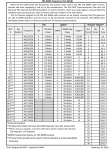
Here's a frequency list that shows you a better picture.
FRS-GMRS-Frequency-Chart.pdf (cert-la.com)
1711931338507.png
 
All of the frs family radios I have seen have all the same 22 channels just at lower watt output, so for nearly the same price might as well get the better gmrs radios (which also have all 22). Then if you do want to get the family license you can use the higher wattage, the ability to program for repeaters, and use the tones/codes even for simplex (radio to radio).

Plus 1 on the radiodity gm30 and the yeasu fr65r (at least one of these)
 
I've been trying to do some research on this issue. It's the only thing missing in my life when it comes to being prepared.

I thought about just getting a regular 2-way radio for my wife and I when we go out hiking, snowboarding or just around the house etc Not sure how it'll work well when we are up in the mountains (Regular walkie talkie).

When I started looking into GMRS radios, there was a lot going on i.e. licensing, programing, repeater etc

I thought about 'Well, I'll just get both to make it simple, GMRS for emergencies and the 2-way for recreational use."

IF i was to get 2 GRMS radios, one for my wife, one for myself because for the most part due to work, we are apart from one another. Do i need to get 2 licences because of the call signs? How does that work? "Bosslady, come in this is Tired AF over?" or "Bosslady, this is Bosslady come in over?"

Can we program to a specific channel where we can just randomly say "Hey Dear, is the Corned Ready, need anything else at Smiths?"

I apologize, I'm very ignorant to this and it's a mission searching the web with my tired eyes and old body.
 
One GMRS license covers the immediate family.

So you'd announce your callsign as is done with HAM
 
You can use a simplex frequency with GMRS, no need to put in the repeater's frequency, PL tone, etc.. that's line of sight transmission.
Programming in a GMRS repeater that is near you is easy, takes about 30 seconds. I can walk you through it over the phone, there are several GMRS repeaters that cover the Las Vegas Valley.
For a pair of starter GMRS radios, I can highly recommend this deal:
Great radios, and a smoking price right now $42.49 for TWO
Amazon.com: 2 Pack Radioddity GM-30 GMRS Handheld Radio 5W Long Range Two Way Radio for Adults, GMRS Repeater Capable, with NOAA Scanning & Receiving, Programming Cable, Display SYNC, for Off Road Overlanding : Electronics
 
Bao Feng radios are considered by most hams to be disposable radios, with infrequent use they may last a year or two, but with everyday use, six months to a year is the average lifespan.
There is no repair facility for them in the USA and everyone who has sent one back to China for repair has spent more on the shipping than what the radio cost, and they never got the radio back.
Radioddity has a far better reputation and a better warranty, and they are far easier to program, either manually or with the CHIRPS or RTS software and a cable and pc. As the head of the Nye County Emergency Communications Group, a lot of our members tried Bao Fengs for GMRS and for dual band Ham (2 meter&70 cm) use, all have now gone to the Radioddity GMR 30 for gmrs and Yaesu for the dual band Ham gear.
That's 30+ members with bad experiences with the Bao Feng.
The GMR30 can be had as a single radio if you don't need two.
 
Also it appears the Bao Feng in your link is strictly a simplex radio, it will not communicate through GMRS repeaters.
 
For @Skullleader05 the two way radios you refer to are essentially gmrs radios just scaled down simpler to operate. Most little blister pack walkie talkies come preprogrammed with 22 channels, and have limited range in part due to quality and output power (wattage). I'll limit my comments about gmrs radios to the radiodity gm30, which I agree with @nycogunsmith is the best choice for many reasons.
The gm30 comes preprogrammed with the same 22 channels right out of the box. So if you buy two, turn them on and go to channel 5 they function exactly the same as the others. So they are suitable for all of the activities you mentioned and can be used use as easily as the walkie talkies in these applications. Now there are probably millions of people doing this everyday that don't realize they are violating fcc regulations by using them this way. I am not suggesting anyone violate the rules but fact is it happens.
One huge advantage to gm30 over walkie-talkie is the removable antenna. So a handheld radios line of sight is limited mostly by the antenna. With my little stock antenna in Pahrump I can probably guarantee 3-4 mile range. If I put a longer/better antenna maybe 5-7. If I put a magnetic mount on my truck and attach to my handheld maybe 10-12, if I put an antenna on my roof at home maybe 15-20. At my daughter's in salt lake City we have an antenna in her attic and are getting 20+ miles.
Gmrs operators vary, some are hams who are also licensed for gmrs some are not licensed. When using repeaters to talk it is usually more ham like....callsigns, etc but much more relaxed. When just talking radio to radio (simplex) you hear all kinds. Again I am not ignoring regs just saying what real world is like. So if you are licensed and talking radio to radio you could call up and say honey are you there? I am gonna stop at the store! If you end that with www123 great. Many don't, but you should.
So two gm30's and a gmrs license is under $100 and should should satisfy your needs and if you never use your callsign you'd be just like the other million lol....
 
The GMR30 also has the ability to use GMRS Repeaters, which the 22 channel GMRS blister pack radios do not.
I regularly check into the Monday night 1900 hours net conducted via the High Potosi 462.625 GMRS repeater from my living room here in Pahrump, via a GMR30 with a super rubber duck antenna and the radio set to the .5 watt low power setting, with the standard short rubber duck antenna that it came with, I can do the same with it set to the high, 5 watt position.

Line of sight at 5 watts UHF can have a pretty great distance with no objects in the way, over totally flat ground or water (lake, ocean, great plains, etc. ) it wil often reach 100 miles or more with a good antenna.

A buddy of mine worked the high potosi 2 meter repeater from Stella's cabin out in stripped butte valley in Death Valley with a 5 watt 2 meter hand held, also considered a line of sight band, with a small 3 dB gain mag mount antenna on the roof of his 4x4, line of sight distance there was 127 miles.

A couple of keys to making contact, beyond power and a good antenna that is, is the ground plane and antenna orientation.
Too many folks imitate what they see on TV and the movies, with folks holding a handheld in a manner that looks tacti-cool, radio and antenna parallel to the ground.

Problem is, unless the other receiving station also has its antenna horizontally polarized (parallel to the ground) the intercept point for the signal becomes very small.
If one antenna is held vertically, and the other horizontally, the intercept point for the RF (Radio Frequency) signal is the point where the two planes cross, very small.

If both antennas are oriented in the same plane, then the entire length of the antenna is the intercept point, much great signal capture area that way!

At low power, both 2 meter (140-148 MHz) and UHF (420-470 MHz) tend to travel a bit farther if vertically polarized, that is, the antennas on both the transmit and receive stations are both perpendicular to the ground.

Notice that bolded word "GROUND" appearing a number of times above.
The radio signal needs something to push off from, in order to travel any distance at all.

Otherwise, it's like a car with slick tires, covered in grease, on smooth glass, no matter how much horsepower is fed to the wheels, you are not going anywhere very fast or far.

The GROUND PLANE for a handheld radio is............wait for it...................YOUR BODY!
Yup, through capacitive coupling, YOU become the ground plane when you hold the radio in your hand.
Need to increase the range of a handheld?
It's easy.
Cut a piece of light gauge wire, say, 26 to 30 gauge, to a length of 1/4 or 1/8th wavelength for the frequency you are going to transmit on.
How do you figure that out>
Easy.
For a 1/4 wavelength, divide 236 by the frequency in MHz (Mega Hertz).
For a GMRS transmit frequency of say, 467.625 MHz (that's the High Potosi input frequency by the way, all GMRS repeaters operate at a PLUS 5 MHz shift up from their transmit frequency),
234/462.625 =.510 feet.

So you cut a wire about 7 inches long (6 inches for the .510 feet, plus an inch for the loop) and you strip bare the last inch of wire, form a loop, unscrew the antenna off the hand held (which you CAN NOT do with those blister back GMRS or FRS radios by the way, but you CAN with the Radioddity GMR30) drop the bare loop over the external threads of the radio's antenna connector, and screw the antenna back on.

Let the remaining 6 inches of wire hang down the side of the radio, now when you transmit, you have a good electrically connected ground plane in addition to the piss poor capacitively connected ground plane of your body.
Distance for transmitting a clear signal jumps up significantly. Doesn't do much on the receive side, helps a little there, but the big gain is on the transmit side.

For an 1/8 wavelength, divide 118 by the frequency in MHz

For a half wave, 468, full wave, 936.

The above trick works on any frequency in a handheld that has a detachable antenna.

 
You can use a simplex frequency with GMRS, no need to put in the repeater's frequency, PL tone, etc.. that's line of sight transmission.
Programming in a GMRS repeater that is near you is easy, takes about 30 seconds. I can walk you through it over the phone, there are several GMRS repeaters that cover the Las Vegas Valley.
For a pair of starter GMRS radios, I can highly recommend this deal:
Great radios, and a smoking price right now $42.49 for TWO
Amazon.com: 2 Pack Radioddity GM-30 GMRS Handheld Radio 5W Long Range Two Way Radio for Adults, GMRS Repeater Capable, with NOAA Scanning & Receiving, Programming Cable, Display SYNC, for Off Road Overlanding : Electronics

Ordered. Will keep you posted, thank you.
 
For @Skullleader05 the two way radios you refer to are essentially gmrs radios just scaled down simpler to operate. Most little blister pack walkie talkies come preprogrammed with 22 channels, and have limited range in part due to quality and output power (wattage). I'll limit my comments about gmrs radios to the radiodity gm30, which I agree with @nycogunsmith is the best choice for many reasons.
The gm30 comes preprogrammed with the same 22 channels right out of the box. So if you buy two, turn them on and go to channel 5 they function exactly the same as the others. So they are suitable for all of the activities you mentioned and can be used use as easily as the walkie talkies in these applications. Now there are probably millions of people doing this everyday that don't realize they are violating fcc regulations by using them this way. I am not suggesting anyone violate the rules but fact is it happens.
One huge advantage to gm30 over walkie-talkie is the removable antenna. So a handheld radios line of sight is limited mostly by the antenna. With my little stock antenna in Pahrump I can probably guarantee 3-4 mile range. If I put a longer/better antenna maybe 5-7. If I put a magnetic mount on my truck and attach to my handheld maybe 10-12, if I put an antenna on my roof at home maybe 15-20. At my daughter's in salt lake City we have an antenna in her attic and are getting 20+ miles.



Gmrs operators vary, some are hams who are also licensed for gmrs some are not licensed. When using repeaters to talk it is usually more ham like....callsigns, etc but much more relaxed. When just talking radio to radio (simplex) you hear all kinds. Again I am not ignoring regs just saying what real world is like. So if you are licensed and talking radio to radio you could call up and say honey are you there? I am gonna stop at the store! If you end that with www123 great. Many don't, but you should.
So two gm30's and a gmrs license is under $100 and should should satisfy your needs and if you never use your callsign you'd be just like the other million lol....
Gotcha, thank you!
 
Purchased a pair of the Radioddity GM-30 for the GF (on sale on Amazon with prime day. I only had a GMRS-9R for myself previously). Downloaded the software and programmed in the local repeaters.

Now I want a Nagoya NA-771G antenna (or maybe a 701G) and a magnet mount for the car. Sadly the antennas are going to be more expensive than the radios themselves.

Do people have suggestions for a good car magnet mount? Looks like the Nagoya NMO-200C might be the way to go.
 
Both good antenna choices, any decent mag mount that accepts the NMO base will work.

The Nagoya NMO-200 C will also work when you get your HAM license and upgrade to a 50 watt dual band mobile, and IF you have it opened up so that it will also transmit on the GMRS band.
One radio, 1 antenna, 3 bands.

Not legal unless the dual band radio is both Part 97 and Part 95 ( of FCC title 47 code) certified, but in reality, I believe that if you have both a GMRS license and an Amateur license, and the radio does not put out spurious emissions on any band, VHF,UHF (GMRS is part of the UHF band) GMRS, the FCC doesn't really care, they got their money, you have the proper licenses, the airwaves are clean and free of spurious emissions and harmonics, and all's right with the world.

Besides which, how would anyone ever know from your transmissions if the radio was both 95 and 97 certified, or just one or the other?

Just my personal opinion is all, not advocating violating any laws, just saying it is possible to have that combination.
If you were to do that, I'd be sure I had both licenses.
 
I use Signal Stuffs dual band and it works great on gm30, they are super flexible and can't break his website talks about shortening for gmrs but mine has worked great without shortening and I move it back and forth to my handhelds. I've tried about half a dozen mag mounts on the cars and to be honest (I know I'll be accused of crazy) but the little short cheapy from Midland workers as well as any on the cars.

Also I love the yaesu ft65 radio easy to unlock for gmrs use if you chose, great little radio for ham too.

Added link mxta-13
https://midlandusa.com/products/micromobile-mxta13-replacement-antenna-2-1db
 
Last edited:
Working on the Ham Radio license. I have a Baofeng UV-5R to start me off when I finally get my Ham license.

Playing with it today and getting annoyed because I can't get these to hit any of the repeaters in Vegas. Uploaded a picture of the programming chart.

GM30 Programming.png
 
Here is one of the repeaters for mine

[462.650000/+5.000/250.3]

Your numbers are definitely different than mine for the repeaters, but I renamed a few of them.
 
Ch 31 is RX 462.700 but TX 467.525 (should be .700);
Ch 32 is 462.675 but TX 467.525 (should be .675)

In fact none of what you have on the screen shot is +5mhz except the Rat625 repeater. I forget what the PL is on that but if that repeater is up, most of Vegas should be able to hit from outside of a building. If you are inside of a building, maybe not so much.
 
I agree with titans response all your tx freq are incorrect except rat625. I checked my radios and plntones you have are correct for ch 31, 32, 33 I don't use other repeaters so can't confirm.
 
PL tone for the 462.625 RAT repeater located on High Mt. Potosi is as shown in the chart above, 141.3.

and just to clarify for newbies, that chart shows the frequencies BACKWARD from the way a HAM states them.

When we talk about a HAM repeater (and GMRS is the same) we state the frequency the REPEATER transmits on, and the shift direction (shift is 600 KHz plus or minus for 2 meters, 5.0 MHz plus or minus for UHF HAM band, and ONLY PLUS 5.0 MHz for GMRS) and the PL tone.

So, if I asked you to meet me on a repeater you didn't have programmed, I would give you the information like this for that 462.625 RAT repeater: 462.625 (+) PL 141.3.

This indicates that your radio should SHIFT upward by 5 MHz when you push the PTT button, and it should transmit the subaudible PL tone of 141.3 Hz.

If programmed correctly, when you hit the PTT, your radio would transmit the 141.3 PL tone on 467.625 MHz which is the correct 5 MHz UP (Positive, plus, +) frequency from the repeaters TRANSMIT frequency of 462.625, and when you release the PTT, your radio will LISTEN on 462.625 MHz.

All GMRS repeaters are a full 5.0 MHz POSITIVE (+) shift UPWARD, that means that the repeater LISTENS on a frequency 5 MHz HIGHER than what it transmits on.

So, your radio needs to shift UPWARD (+) by 5 MHz when you press the transmit key.

That software lists the higher frequency as the TX (Transmit) frequency, which it is, but it is the transmit frequency for YOUR radio, not the repeater.
That RX (Receive) frequency shown is the frequency the repeater TRANSMITS on.

I have no idea why some of these software programs do it this way, in the radio world (HAM, commercial, etc. ) we always define what the REPEATER does, what frequency it TRANSMITS on, and the shift and the PL tone (if required, not all repeaters will make use of a PL tone if there is no other repeater near by on the same frequency or one very close to it, there is no need for the PL tone.

PL stands for Private Line, a Motorola® trademarked term.

A repeater LISTENS on one frequency, and if it is programmed with a RX (Receive) PL tone required, when it hears that subaudible tone on the carrier from your radio, then it instantly couples the output of its receiver to the input of its transmitter and activates the transmitter.

If it doesn't hear the PL tone it is programmed for, it doesn't do any of that.

Some repeaters will pass the PL tone on via their transmit frequency, so that you can have your radio programmed to receive multiple repeaters on the same frequency in the same geographic area, but you will only hear the one you select from the radio's memory that has the PL tone set up for RX as well as TX.
 
Last edited:
And remember folks, I can supply you with the study questions for all three classes of Amateur Radio License, where to take free practice online exams, and where to take the real exams, frequently with one of the LAUREL VE teams, those are free, all other VE teams charge $15 per exam.
 
Thanks for pointing that out!

An update for those who buy this brand and want to program it with the software: It doesn't automatically update the transmit frequency *unless* you use the dropdown for the receive frequency (I've been manually typing in the frequencies). And you can't specify the transmit frequency because it's greyed out but using the dropdown will auto update the transmit frequency correctly.

*sigh*

I hate this propriety Radioddity software you need to program the radios. You would think being a budget brand they'd make it easier to play nice with other resources out there instead of trying to lock you in.
 
That looks like the standard Bao Feng software to me, and it is a pain , easier to program the radio manually using the key pad and menu.

The Radioddity GMR30 is much easier to program, can be done in a couple of minutes using the keypad.
Learn to program any radio manually, in the field, in an emergency, you are not going to have the laptop and software handy.

OR pick up a Yaesu FT65R or FT4X and use the codes to open them up so that they will transmit on GMRS as well as the Amateur 2 meter and 70 CM bands.
Yaesu radios are about the easiest to manually program there is.
I own Yaesu, Kenwood, Icom, Alinco, Bao Feng, and have programmed TYT, HYT, Wouxon, etc. for others, the Yaesu is hands down the easiest and fastest to manually program.


Back
Top